Written by Aaron-Michael Fox.
The city in West Virginia that bears the name of Huntington was incorporated in 1871. It was one of the first planned cities in American history with streets aligned in a grid with corresponding street and avenue numbers.
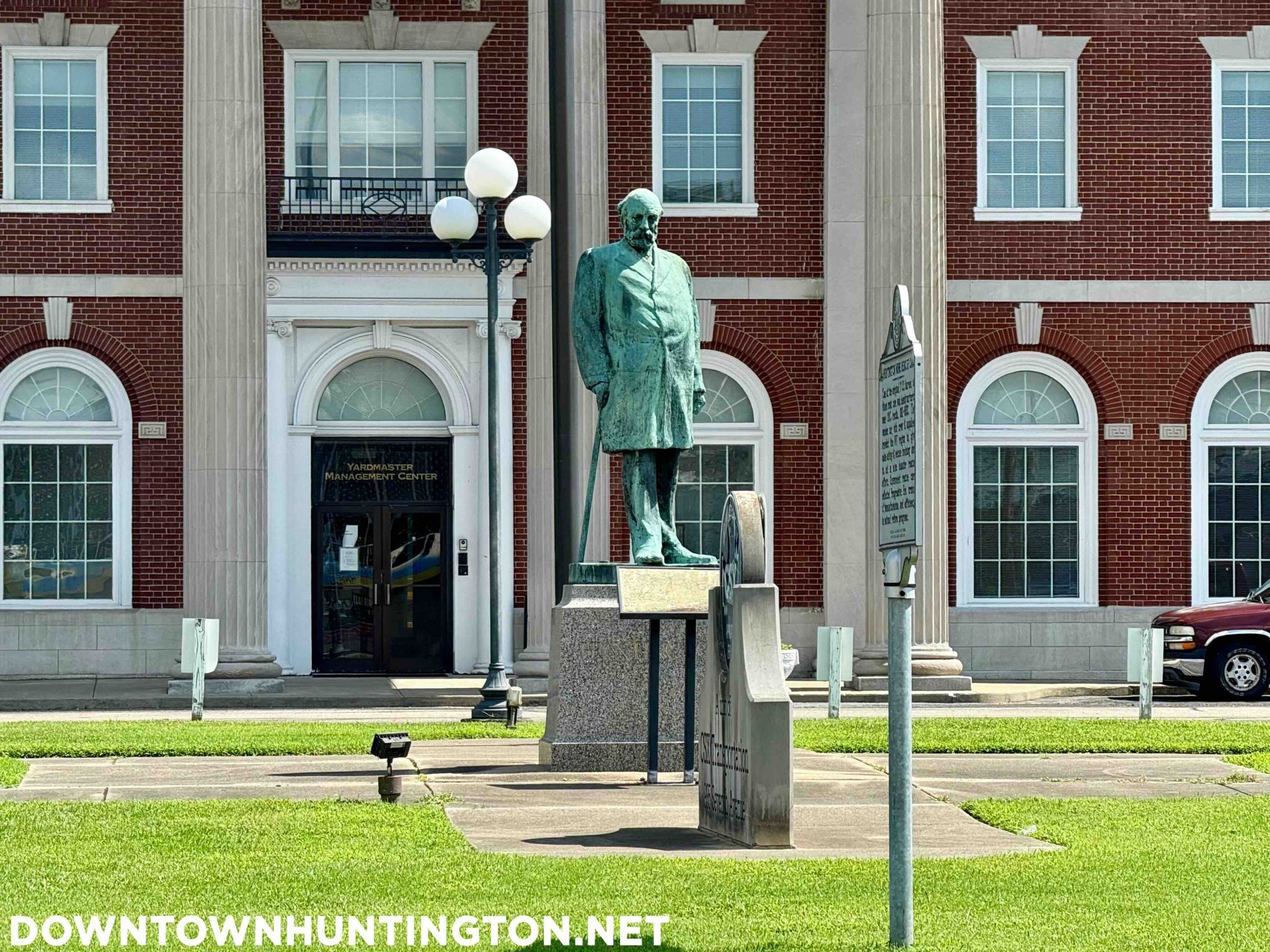
Statue of Collis P. Huntington by Gutzon Borglum outside the Huntington CSX offices.
This city was the singular vision of the 19th Century railroad tycoon Collis P. Huntington. When Congress called for a great railroad that would connect the east and west coasts, Mr. Huntington made sure his railroad, the Central Pacific Railroad, got the contract for the western half.
The Transcontinental Railroad was famously completed with a golden spike on May 10, 1869, and that left Mr. Huntington with some free time. He opted to turn his focus to completing a railroad connection from the Chesapeake Bay to the Ohio River, speeding passenger and cargo travel across the mountains.
The Chesapeake & Ohio Railway had been left in huge debt from the Civil War, so it relied on Mr. Huntington’s injection of capital to expand and stay afloat. Mr. Huntington in turn installed himself as C&O President. He assumed control of the railroad on November 29, 1869.
Collis P. Huntington solicited his brother-in-law Delos W. Emmons to travel with him to the new state of West Virginia to look at the route. On the Ohio River end, Mr. Huntington eyed a plot of land just west of the 18thCentury town of Guyandotte, between the Guyandotte and Big Sandy Rivers, where he envisioned a new city.
Original C&O Huntington Passenger Depot in 1873.
At Mr. Huntington’s direction, Emmons bought up 21 farms totaling 5,000 acres and hired Rufus Cook, a Boston engineer, to design a new city. On February 27, 1871, the West Virginia Legislature approved the incorporation of the City of Huntington. On December 31 of that year, Peter Cline Buffington was elected the first mayor.
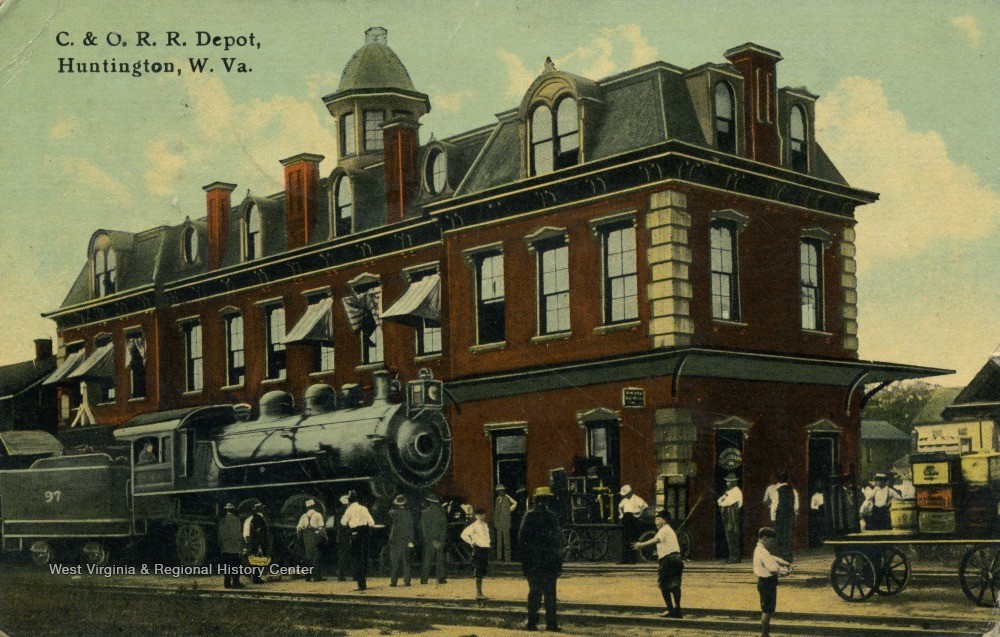
After Mr. Huntington acquired the land that would become our city, he ordered construction of the car and locomotive shops, houses for the workers, and a three-story passenger depot necessary for the railroad to function. Huntington’s original C&O Depot was completed in 1872. The depot was replaced with the current Colonial Revival style building in 1913.
In 1873, the Chesapeake & Ohio Railway was completed connecting Huntington to Richmond. The first train arrived in Huntington on January 29, 1873. The route, known as the George Washington Line as it was first surveyed by George Washington, is still in use today by the Amtrak Cardinal.

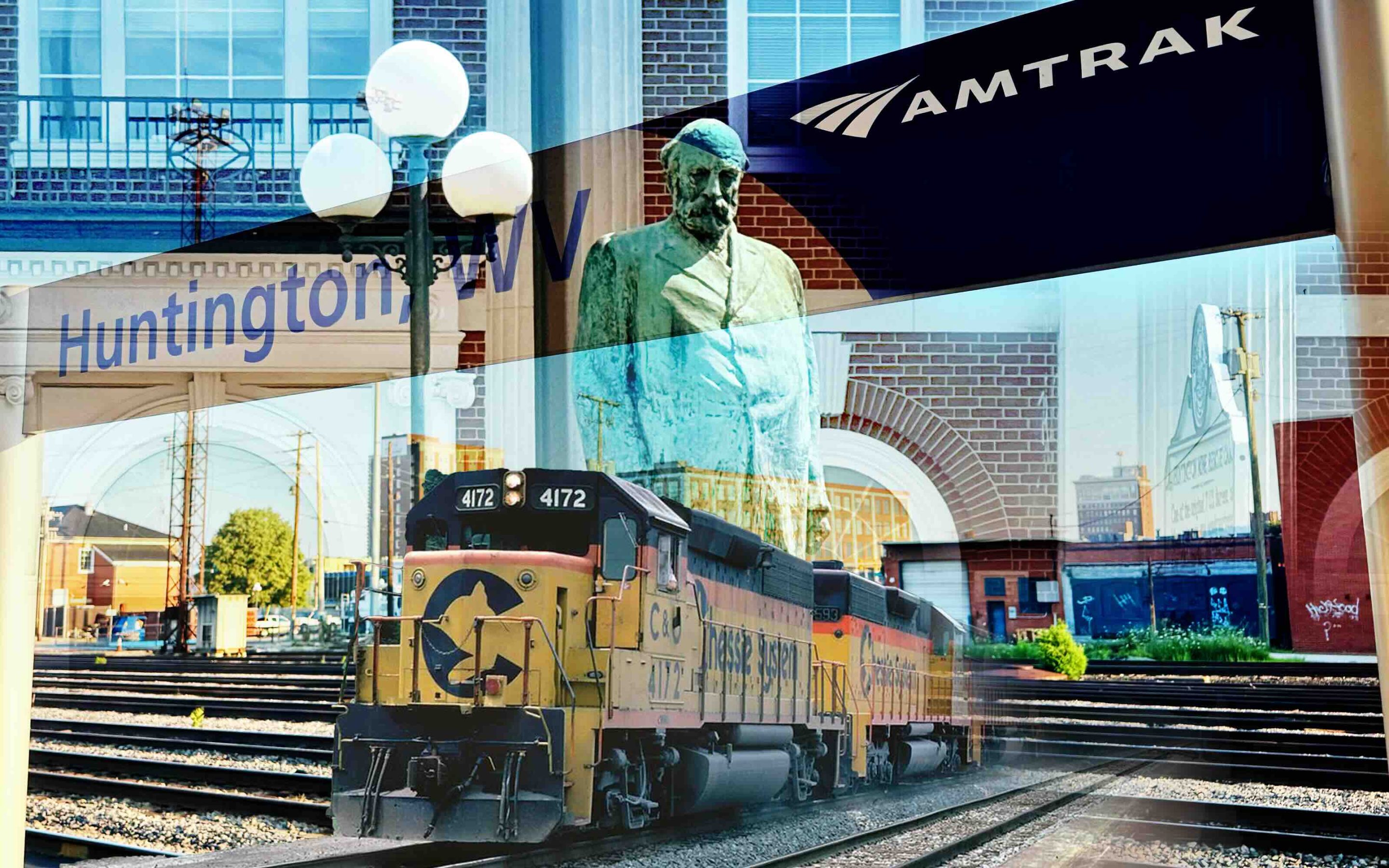
Huntington-built Chessie System GP40-2 diesel locomotive No. 4172 at the White Sulpher Springs Station in 1980.
Jimmy Moseley photo, @Chesapeake & Ohio Historical Soc , archive # COHS-21809.
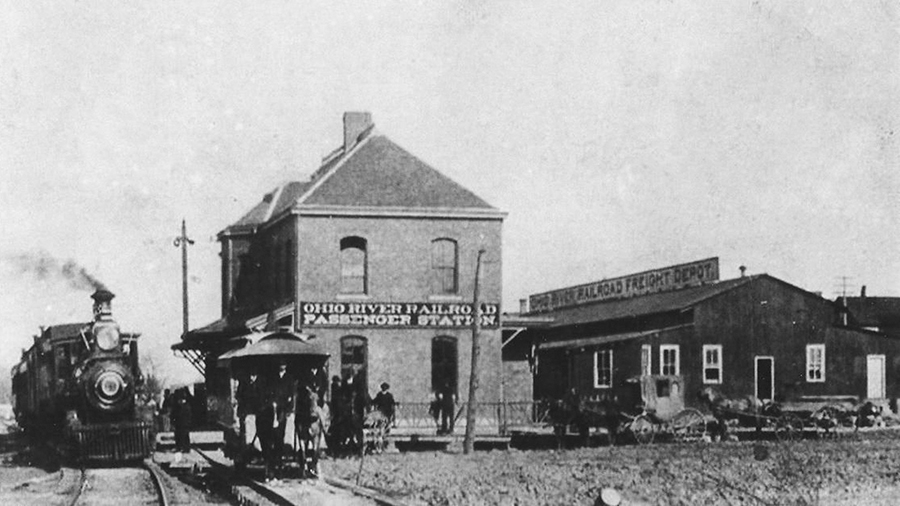
The Baltimore & Ohio Railway opened its Huntington Depot in what is now Heritage Station in 1887. The C&O and B&O later merged to form the Chessie System and is now CSX Transportation.
Due to rising competition from airlines and interstate highways, the C&O phased out passenger travel in the early 1970s. The last C&O passenger train left the Huntington Depot in April of 1971.
Amtrak assumed responsibility for passenger rail traffic in the U.S. with the Rail Passenger Service Act of 1970. With that bill, Amtrak assumed common carrier obligations of the private railroads in exchange for priority access on their tracks for incremental cost.

View of downtown Huntington, WV from the Amtrak Station.
The modern Huntington Amtrak Station is located on the south side of the tracks at 10th Street and 8thAvenue. The station opened in 1983. Service runs through Huntington on Sundays, Wednesdays, and Fridays, eastbound to New York in the mornings and westbound to Chicago in the evenings.
Links:
-
- Ohio River Railroad Depot, later the B&O Depot. Now Heritage Station.
-

- Old C&O Passenger Depot, now CSX Huntington Division offices.

-
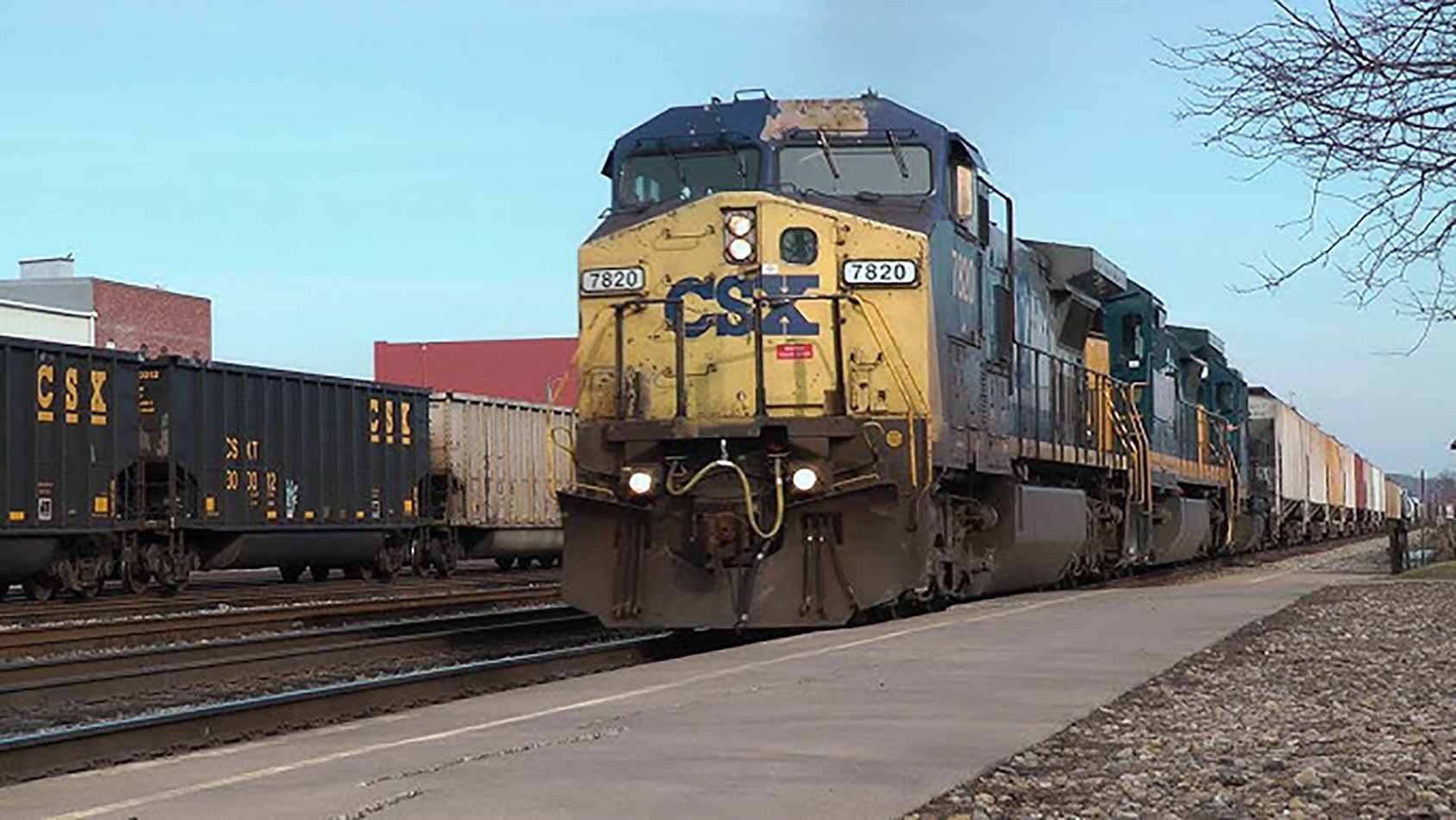
- CSX train passing the Huntington Amtrak Station. Huntington Quarterly photo.
-

- The old B&O Passenger Depot, now Heritage Station.

-

- CSX engine nicknamed “Rolling Thunder” painted in Marshall University colors and insignia.

-
- Passengers wait to board an eastbound Amtrak train at Huntington Station.